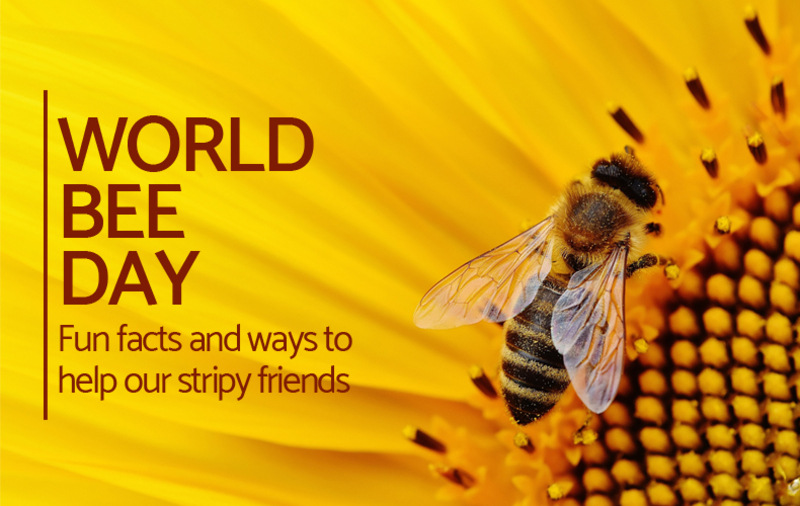
You’ve probably already seen a few bees this year, buzzing around from flower to flower and heralding the beginning of the warmer months. But bees are so much more than a symbol of summer, they are integral to the environment and our way of life. Urbanization and overuse of pesticides increasingly threatens the survival of bees, which in turn threatens both humans and the environment. To celebrate World Bee Day we’ve gathered up a list of fun facts to celebrate these stripy insects, as well as some things you can start doing today to help them (and us) survive.
- There are 3 types of bees in a colony. The Queen runs the hive, lays eggs and controls the other bees, the workers are female and are the ones you see foraging for pollen outside the hive, and the drones are male – their only purpose is to mate with the queen.
- The average worker bee lives for 5-6 weeks
- The queen can live up to 5 years and lays 2,000 eggs per day. If the queen dies, a new queen is chosen from a larva – this young bee is fed ‘royal jelly’ so that it develops as a queen rather than worker bee
- Bees fly up to 15 miles per hour, which is pretty slow in the insect world!
- Bees are responsible for pollinating a third of the food we eat as well as 80% of flowering plants; it’s been estimated that farmers in the UK would have to spend £1.8 billion per year to recreate the amount of pollination that bees provide.
Bee decline is on a global scale due to habitat loss and toxic pesticides, but there are some small things you can do to help out bees in your local area:
- If you find a tired bee, mix 2 tbsp sugar with 1 tbsp water and leave near the bee – the sugary liquid will give it enough energy to get up and fly back to the hive
- Build or buy a bee hotel for bees to rest and hibernate in
- Only buy local, raw honey, to encourage bee keeping and the preservation of the bee population in your area
- Plant bee-friendly flowers such as lavender and bluebells, as these are rich in nectar
- Avoid using pesticides in your garden as this can harm bees and kill helpful insects that help with pollination