May Day celebrations have been around for over 2,000 years, beginning as the Roman Festival of Flora (the goddess of fruit and flowers). The Festival of Flora marked the beginning of Summer and was originally held between the 28th April and 3rd May, but in recent years the celebration date has changed to the first Monday in May, with this day now being an extra work holiday for most. May Day festivals are still held in many villages across the country, and we’ve explored some of the age-old traditions that still prevail to this day.
- May Day Morning
Traditionally, the whole family would go out early on May Day morning and collect flowers and greenery to adorn the house, as this was supposed to bring good fortune for the year ahead. Today the idea of an early rise is still common, with madrigals (an a capella choral song) being sung from the roof of Magdalen College in Oxford in the early hours of May Day morning, a tradition that has been going on for over 500 years.
- The May Queen
Each year one lucky girl in the town is named the May Queen, a personification of the Roman goddess Flora. She wears a beautiful flower crown and is responsible for making a speech before leading the May Day parade. The May Queen doesn’t usually take part in the festivities, but watches her ‘subjects’ from a flower-adorned throne.
- The May Pole
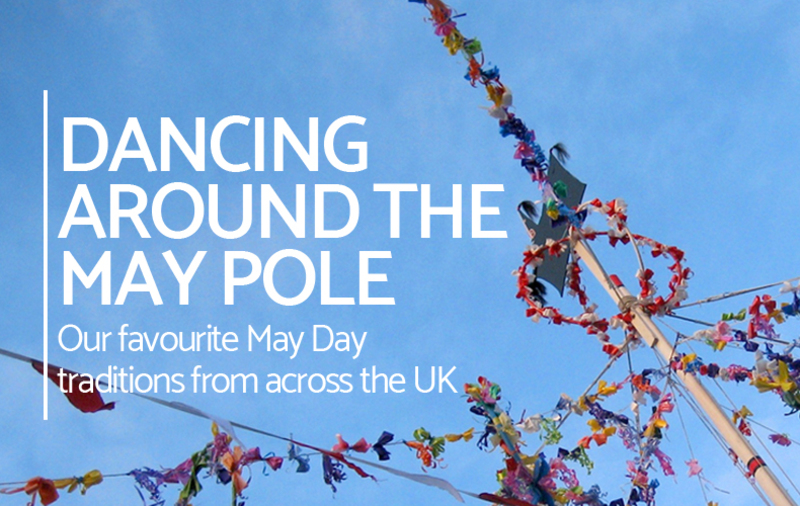
The idea of a May Pole originates from Pagans, who would cut down young trees and stick them in the ground in the middle of the village to mark the arrival of Summer. Many towns and villages now have a permanent May Pole, which becomes the centre of May Day celebrations each year; people practice dancing around the pole for weeks before the event, which culminates in beautiful pleated ribbons winding round the pole when the dance is complete.
- Morris Dancing
Believed to have been introduced to England by the Moors of North Africa, Morris Dancing is as much an English tradition as it is to do with May Day. Depending on the region, this lively dance is accompanied by an accordion, a fiddle or even a full band with drums. Dancers shake handkerchiefs or bang sticks together as they dance, and many also wear bells on their knees, making a cacophonous display.
- Jack in the Green
Jack in the Green is believed to be a woodland spirit who guards the greenwoods of England; each May Day, one person is dressed from head to foot in a huge cone of foliage to pay homage to him. The Jack then leads a procession of ‘Bogies’ (drumming men dressed in green rags and yet more foliage) through town, dabbing green paint on any spectators not already adorned in the colour. The most famous Jack in the Green procession is in Hastings, where hundreds of Bogies escort Jack through the streets, stopping for refreshments at pubs along the way.