
Top Tips for Summer Lazy Days
09 Aug 2019

10 Jun 2019
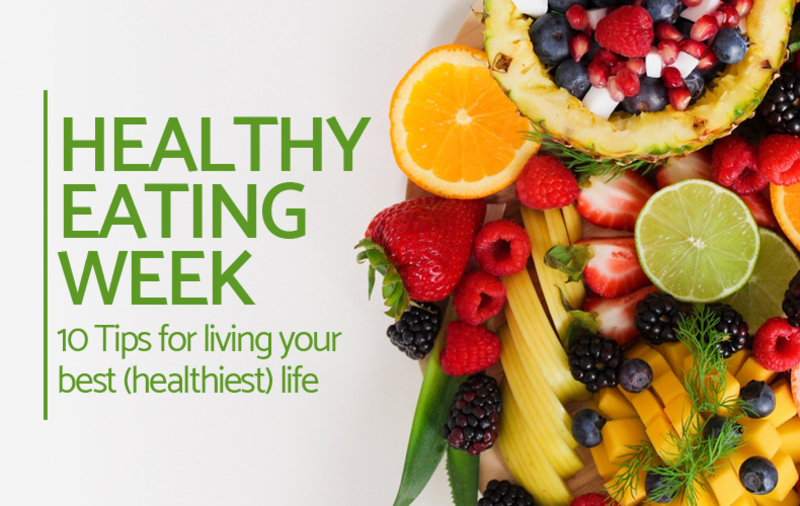
In our modern world, living a healthy lifestyle can be difficult if seemingly impossible a lot of the time. The British Nutrition Foundation have taken this week to educate people on how to live more healthily, whether through small changes or a larger lifestyle over hall. In celebration of this, we’ve built a list of 10 tips for living a healthy, active lifestyle that are easy enough to start implementing today.
To find out more about BNF’s Healthy Eating week, click here.
Keeping hydrated is so important in life in general, and so leading a healthy lifestyle means making sure you’re drinking enough water; the recommended daily amount is 2-3 litres, or 8 glasses. Drinking enough water isn’t just for hydration, it can help you to sleep better and also keep annoying hunger cravings at bay.
Many people struggle to get enough sleep each night, due to our busy lifestyles and nightly stimulus like TVs and smartphones. Getting enough sleep not only makes your waking life more productive, but can help you to lose weight as part of a healthy diet. The recommended amount of sleep varies from person to person – some people need 8 hours or more, whereas some only need 6. Pay attention to how much sleep you’re getting and adjust accordingly until you find your perfect time each night.
This might seem obvious, but sitting around and leading a sedentary life isn’t healthy at all. Now, we’re not saying you need to go and buy an expensive gym membership or start running ten miles a day (unless this is the kind of exercise you’re craving) – you can start with something as simple as walking around the block every evening or cycling to work. As long as you’re moving around and doing something you enjoy enough to keep at regularly, it’s a step in the right direction.
Dieticians in general tend to recommend 5 portions of fruit and vegetables per day in order to maintain a healthy lifestyle, but the more you can get into your diet the better. Each portion should fit comfortably in the palm of your hand, about 80g. If you’re new to fruit and veg, a good start is to swap one of your daily snacks for a fruit pot or vegetable crudités.
This is another somewhat obvious one, but the chances are that if all of the food on your plate is beige, you’re probably not getting a great deal of nutritional value from it. Eating the rainbow is a great visual way of making sure you’re eating a wide variety of nutrients, making sure you’re balancing well between fruit, vegetables, starches and proteins.
In short, try to choose brown bread/rice/pasta over their white counterparts wherever possible. Refined grains (white) are milled to give a finer texture and longer shelf life, stripping a lot of natural nutrients in the process. These white grains tend to leave you feeling full for a much shorter period than intact grains (brown), which are high in fibre and nutrients.
A healthy lifestyle isn’t all about your physical wellbeing, it’s about your mental health as well. Making a conscious effort to look on the positive side of things and giving your mind time to relax by meditating will not only improve your mental health, but your physical health. Remaining positive can be hard when we are surrounded by negative thinkers, and although it might seem harsh, it’s sometimes better to avoid these negative people for the sake of our own wellbeing.
It’s almost impossible to lead a healthy lifestyle if your diet consists of a large quantity of sugary food and drink, like fizzy pop and chocolate. If you really can’t cut these things out for good, try swapping full-sugar fizzy drinks for their sugar-free equivalent, and only eat sugary food as an occasional treat.
Alcohol, when consumed in large quantities, is a huge hindrance in both our physical and mental wellbeing. It can affect our sleep, our moods, and encourage us to crave more salty, fatty foods if not consumed in moderation. A good suggestion is to limit your consumption to a few units a week, or even cut it out entirely if you can.
Buying pre-prepared meals is often far less healthy than cooking your own food from scratch, as they can contain more fat, salt and sugar than you really need. By preparing and cooking meals yourself, you know exactly what’s going into your food and can limit the fat and salt content to healthy levels, whilst adding more vegetables to bulk up the nutrition content.