Top Tips for Summer Lazy Days
09 Aug 2019

23 May 2019
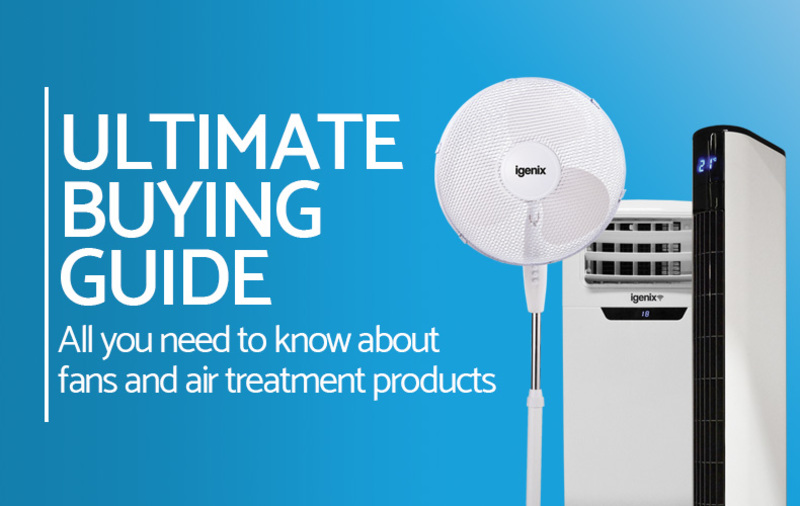
There are so many fans, air coolers and air conditioners out there on the market that it can be a little overwhelming when deciding which product is best for you. We take a look at the different types, styles and sizes to help you understand the pros and cons of each.
Ideal for: Providing comfort for typically one person at close quarters.
Desk Fans: Simple and straightforward providing a cool breeze, desk fans usually range from 6 inches to over 16 inches in diameter. They are ideal for cooling individuals at close quarters and can comfortably sit on counter-tops, desks, shelves or other flat-top furniture. Most desk fans have a choice of two or more speed settings and an oscillation function.Ideal for: Around the home or workspace when the ambient temperature is high, providing a refreshing, consistent cool breeze to the surroundings.
Wall-mounted Fans: Where space is limited, consider having a fan fixed to the wall to reduce the amount of objects cluttering up the area. These models often come with a tilting fan head and multiple speed settings, and provide flexibility in where and how high you mount the fan.Ideal for: Use in rooms with regular need for freshening up such as kitchens, bathrooms and laundry/wet rooms.
Pedestal Fans: Offering all of the functionality of a desk fan, these larger floor-standing fans provide oscillation and a choice of fan speed. Pedestal fans stand tall and require no additional surfaces, they have their own base and stand which means it can be freely placed anywhere. The height of a pedestal fan is usually adjustable and can range from under 4 feet to almost 6 feet tall. They are effective in bringing down the temperature more effectively for larger areas. Their height and oscillation means they can provide a natural cooling as the cooler air sinks more evenly.Ideal for: Cooling larger rooms and spaces more evenly for the comfort of more people in the vicinity.
Air Circulator Fans: These are generally larger fans which are designed with fast distribution of air in mind. Typically floor-standing, air circulators are more heavy-duty than your average desk or pedestal fan. Ideal for industrial environments, garages and workshops.Ideal for: Dispersing chemical vapours, fumes or smoke in robust environments, as well as providing a much more powerful flow of air.
Tower Air Circulator Fans: All the power of an air circulator fan but more suited to domestic and normal working environments. The Igenix models have 3 independently angled fan heads. The unit oscillates and each fan head has independently controlled speed settings. Quieter in operation than a standard air circulator, this product offers full versatility as well as a stylish look; a real winner for full functionality and design.Ideal for: Virtually all indoor environments, it combines all the best elements of an air circulator, a pedestal fan and a tower fan.
Mini Tower Fans: Like desk fans, mini tower fans are ideal for cooling individuals at close quarters and can comfortably sit on counter-tops, desks or other flat-top furniture. They have a smaller footprint than typical desk fans and generally look more stylish. Most mini tower fans have a choice of speed settings and an oscillation function. Some have a timer function which is ideal if you need help keeping cool at night.Ideal for: Space-limited surfaces, bedside tables, work desks and small rooms.
Tower Fans: Usually approximately 30 inches tall with a small base, sleek design with oscillation and timer functions, tower fans are both functional and provide complimentary design for the modern room. Tower fans usually have quiet operation despite powerful performance and usually conveniently come with a remote control.Ideal for: Space-limited rooms and living areas or generally for people who’d like a more attractive fan for the home without compromising on performance.
See our range our full range of fans here.
There are several types of air conditioner units available on the market, it can be slightly confusing when navigating your way round the various options and working out what’s best for you. Here’s our guide to explain the differences and the benefits of each type.
Room Size: One of the main factors to consider is the space you’re intending it to operate in. Different sized portable air conditioner units vary in power and capacity, generally the larger the unit is, the greater the size of room it is capable of operating in. Portable air conditioner units generally range from suitability for rooms of around 10m2 to over 50m2.
What is BTU? You’ll often see a BTU figure given for portable air conditioner units, this relates to the capacity of your air conditioner to operate effectively in certain sized rooms. BTU stands for British Thermal Unit, and a single BTU is the amount of heat required to raise the temperature of one pound of water by one degree from 60°F to 61°F. Generally an air conditioning unit with 7,000BTU is the minimum required to cool a small room (18m2) on a hot day. 10,000BTU for medium sized rooms (24m2), around 10,000BTU for larger rooms and around 15,000BTU for typically non-domestic spaces and offices (36m2). See list below for general rule BTU suitable for room size:
Multifunctional / 3-in-1 / 4-in-1: There are several types of air conditioner which are more versatile than a standard air con unit. These often do the job of a standard air conditioner, a fan, dehumidifier and heater, all in one single unit. Some can even be operated via Wi-Fi with an app on your phone, so you’ll be able to control your unit when you’re away from home.
see our Air Conditioners here.
A portable air conditioner uses a built in compressor to draw in the hot air from the room before cooling and recirculating, whereas an air cooler draws in the hot outside air from an open window which is passed over a damp filter that reduces the temperature of the air before pushing it out into the room. As a result air coolers will increase the moisture level in the room, while portable air conditioners will take moisture out. Air coolers are generally preferable for dust allergy sufferers or those with asthma.
Air coolers generally offer better energy efficiency than air conditioners. The cooling process is more natural using water, whereas portable air conditioners use chemical refrigerants and are therefore less environmentally friendly.
However air conditioners do have their strengths - most of us don’t live in a dry hot climate and therefore limits the effectiveness of an air cooler. Air conditioners work well in virtually all types of environment, whilst air coolers are most effective when there is hot, dry external air.
Which is right for you? If you overheat easily then a portable air conditioner may be what you’re looking for. They are generally able to reach lower temperatures than air coolers. Also bear in mind humidity when the weather is hot, if it’s hot and sticky a portable air conditioner will be more effective. If you only experience extreme humid heat occasionally and you crave cool, fresh, clean air then an air cooler will provide a better result for most of the time and will keep the costs down.
A fan is straightforward and consistent, with basically one job – to move air. Fans obviously vary greatly in size, power, styles and functionality, and they are an effective means to cool and circulate air in any given space.
However, fans are limited to cooling airflow slightly, relative to the ambient temperature. There is no extra cooling by active means such is with a refrigerant in a portable air conditioner or by evaporative technology. An air cooler circulates cool purified air, great for taking away dust and allergens from the air. A fan would only blow and disperse air without altering its purity or humidity, which generally means the running costs are lower. Typically air coolers will come with timer functions while only certain fan types will have that as a feature.
See our range of Air Coolers here.
Living spaces can be prone to the build-up of excess moisture which increases the likelihood of mold, mildew and musty odors. Particulates and bacteria thrive in such environments. Rooms can often feel unpleasantly stuffy and damp, which is where a dehumidifier can come to your rescue to help maintain a healthy humidity level. If you suffer from allergies or asthma, symptoms can be greatly worsened by the presence of moist air, dust and mold; a dehumidifier can greatly improve the quality of your home life and health. They run quietly in the background reducing the amount of dust in your home and enable clothes to dry faster and even keep food fresher for longer in kitchen environments.
Which is right for you? The main variable here is room-size. If you only want to dehumidify a small bathroom or laundry room then you’ll only need a small unit. Larger rooms such as lounges and bedrooms require a dehumidifier between 10-20 litres per day extraction. Larger units of around 50 litres per day extraction are more suited to bigger spaces and work environments.
You’ll find models which will differ in how much tank capacity they have for collected water. Larger units tend to have bigger tanks, meaning they’ll require fewer occasions you’ll need to tip away water. How often you’ll need to empty the tank will depend on the humidity level and the size of your tank. Most models will automatically shut-off when they’re full and will alert you when the tank requires emptying – usually by an indicator light. Some models have a hose provided for continuous drainage so you won’t have to worry about having an extra chore to do.
Obviously from the names you can tell they do the opposite thing to each other. We’ve outlined the benefits of a dehumidifier – so why would you want a humidifier?
A humidifier can provide a great health benefit for those who suffer with dry skin, irritated eyes, throat dryness, sinus headaches, cracked lips and other allergies. Using a humidifier can also effectively reduce the symptoms of asthma. Typically these symptoms are exaggerated by colder weather, and where an air conditioner or heater may dry out the surroundings, a humidifier will reduce that drying-out problem for people. A humidifier will also benefit those houseplants which typically thrive in higher humidity.
See our range of dehumidifiers here.